
Cameroonian Youth Cannot Afford to Sit Out the Digital Economy. Conferences Like CITS Matter
A young Cameroonian can have the talent to become a software developer, data analyst, digital marketer or entrepreneur and still struggle to find the right opportunity.
Sometimes, the missing piece is not another certificate. It is access: access to people already working in the industry, information about available opportunities, mentors who can offer direction, and employers willing to give young talent a chance.
That is part of why conferences like the Cameroon International Tech Summit (CITS26) matter.
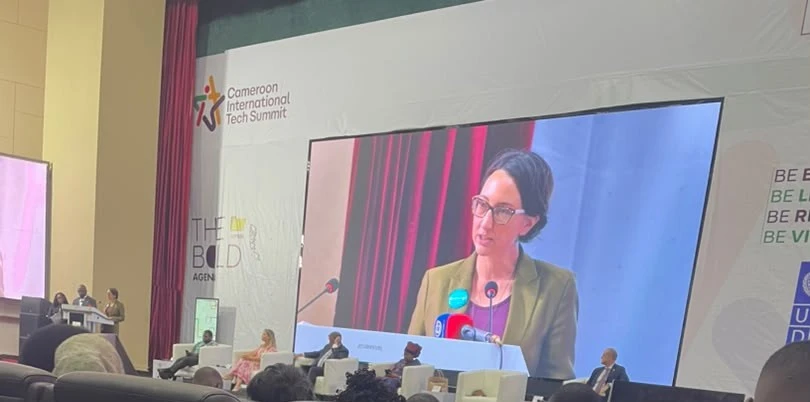
The second edition of CITS officially opened at the Palais des Congrès in Yaoundé on October 15, bringing together government officials, development partners, technology professionals, entrepreneurs and young innovators. The Minister of Posts and Telecommunications, Minette Libom Li Likeng, attended the opening alongside representatives of institutions including UNICEF and the United Nations Development Programme (UNDP). The summit runs from October 15 to 17, 2026. (Journal du Cameroun)
But beyond the speakers, presentations and networking opportunities lies a question that deserves attention: how many young people will leave such gatherings better positioned to participate in Cameroon’s digital economy?
More than a conference room
For young people, attending a technology conference should not be about collecting photographs with prominent speakers or adding another event to their CVs.
The real value lies in what happens before, during and after the event.
A student interested in artificial intelligence might discover a project worth exploring. An aspiring entrepreneur could meet someone who understands the problem they are trying to solve. A graduate searching for employment might learn what companies expect from entry-level candidates. A young professional could connect with someone who offers mentorship or points them towards a relevant opportunity.
These interactions do not guarantee jobs, funding or business partnerships. They can, however, help young people understand where they stand, what the market requires and what they need to do next.
That is a valuable distinction in a world where access to information can influence access to opportunity.
CITS26 is designed around several parts of this ecosystem, including technology discussions, startup engagement, talent development, investor connections and digital services outsourcing. Its official programme also includes an innovation bootcamp and a startup village. (CITS official website)
Young people should approach these spaces with questions, ideas and a willingness to learn—not simply as spectators.
Remote work could widen the opportunity
One of the most important conversations for Cameroon’s young workforce is how to connect local skills with jobs beyond the domestic market.
Remote work and digital services outsourcing offer one possible route.
A skilled developer in Bamenda could build software for a client abroad. A digital marketer in Douala could manage campaigns for an international business. A data analyst in Yaoundé could support a company that operates thousands of kilometres away.
The opportunity is not limited to software engineering. Depending on their skills and experience, young Cameroonians can pursue work in graphic design, content production, customer support, data analysis, cybersecurity, product management and other digital services.
CITS26 has identified digital outsourcing and talent development among its priorities. The wider business question is whether Cameroon can build the skills, professional standards, infrastructure and employer relationships needed to turn that ambition into sustained work.
For young people, the message is equally practical: global opportunities require preparation.
Learning a skill is a starting point. Building a portfolio, completing projects, communicating professionally, meeting deadlines and demonstrating reliability are what help turn that skill into something a client or employer can trust.
A conference can introduce a young person to an opportunity. The work they have done before arriving—and the follow-up they make afterwards—can influence what happens next.
Young people must take responsibility for showing up
There is a temptation to wait until graduation, until a job opening appears, until someone recommends you or until you feel completely ready.
That waiting can become its own obstacle.
Not every conference will be affordable or accessible to every young person. Travel costs, registration fees, internet access and other commitments are real barriers. Organisers and partners also have a role to play in making these events more accessible, particularly to young people outside the country's main urban centres.
But when opportunities to participate are available, young people should take them seriously.
Attend a session that relates to your career interests. Ask a speaker a thoughtful question. Introduce yourself to someone whose work you admire. Listen to the challenges businesses are trying to solve. Find out what skills are in demand and identify one practical step you can take after the event.
And do not assume you need to be an expert to participate. Students, recent graduates and aspiring entrepreneurs have as much reason to learn from these conversations as established professionals have to contribute to them.
The goal is not simply to be in the room. It is to leave with something useful.
What happens after the summit matters most
Cameroon does not lack conversations about youth potential, innovation and digital transformation. The challenge is ensuring that these conversations lead to practical outcomes.
For CITS26, the longer-term impact will depend on whether connections develop into partnerships, whether startups gain access to customers and support, and whether young professionals become better connected to employers and meaningful work.
The same standard should apply to participants.
If a student attends a conference and learns that employers expect practical experience, the next step could be to build a project. If an aspiring entrepreneur discovers a gap in the market, the next step could be to speak with potential customers. If a graduate meets a professional who offers guidance, following up with a thoughtful message could be the beginning of a useful relationship.
These actions may seem small, but they turn attendance into progress.
For institutions, businesses and development partners, the opportunity is to make these connections more accessible and to create clearer pathways from training to employment. For young people, the responsibility is to take advantage of those pathways while continuing to build their capabilities.
Final Thoughts
Cameroon’s digital future will not be shaped by technology alone. It will also depend on whether young people can access the knowledge, networks, skills and markets that allow them to participate in the economy.
CITS26 provides a space for those conversations. But the opportunity should not end when the conference doors close.
To Cameroonian youth: show up when you can. Ask questions. Make connections. Build something that demonstrates your abilities. Follow up. Keep learning.
Do not wait for someone to discover your potential while you remain disconnected from the opportunities around you.
And to the businesses, institutions and event organisers shaping this ecosystem: keep creating spaces where young talent can meet real opportunities—not just hear about them.
The question is no longer whether Cameroonian youth have potential. It is how that potential can be connected to meaningful work, stronger businesses and a more productive economy.