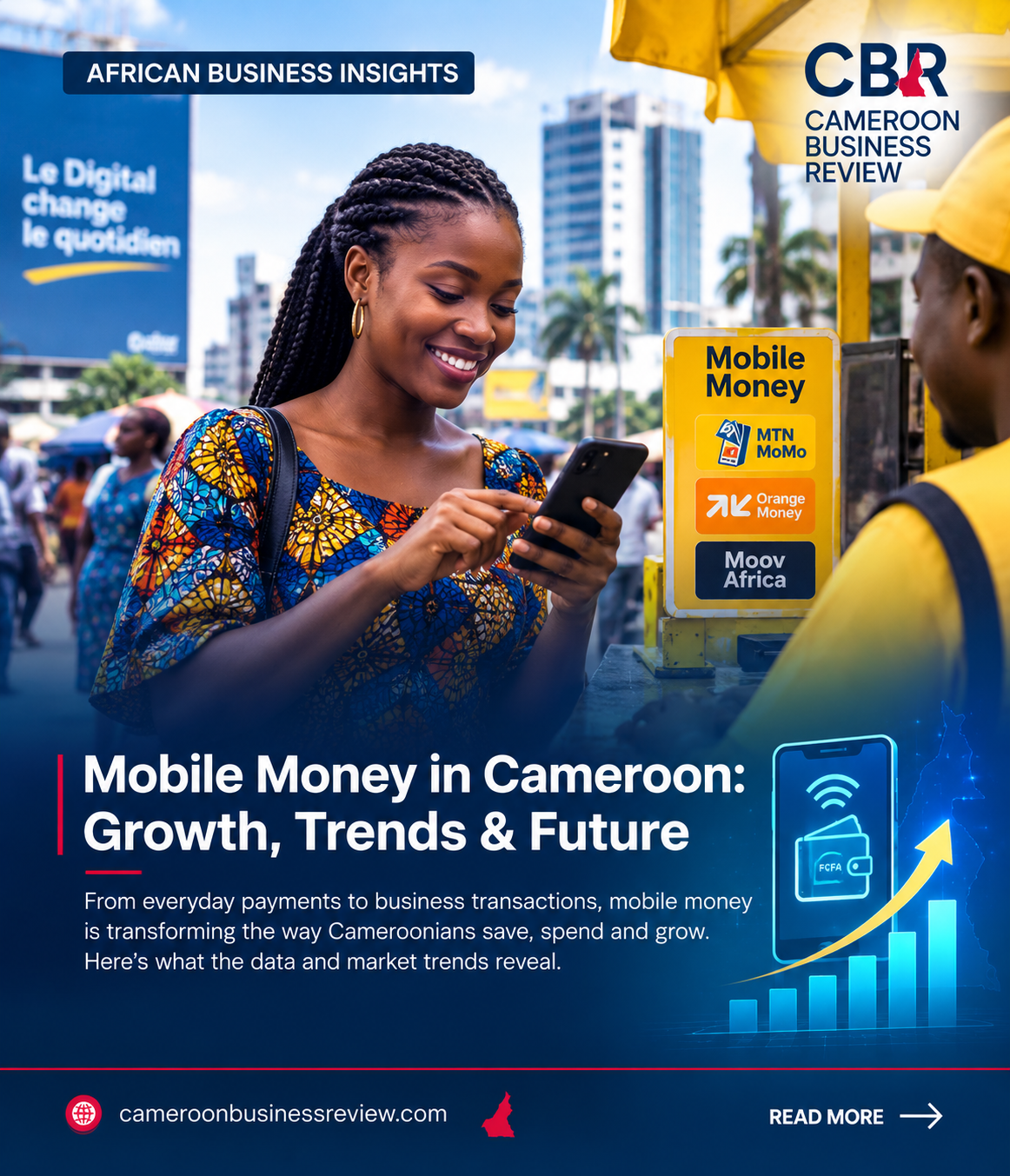
Mobile Money in Cameroon: Fueling the Next Phase of the Digital Economy
Over the last decade, mobile money in Cameroon has evolved from a convenient payment solution into one of the country's most influential financial innovations. What began as a simple platform for transferring money has become a comprehensive ecosystem supporting commerce, entrepreneurship, financial inclusion, and digital transformation.
Today, mobile money services are deeply integrated into everyday life. Consumers use them to pay utility bills, purchase goods, receive salaries, transfer funds, pay school fees, and increasingly access digital financial services without visiting a traditional bank branch. Businesses, from roadside vendors to large enterprises, are also leveraging mobile payments to improve efficiency and meet changing customer expectations.
As Cameroon accelerates its digital transformation agenda and internet penetration continues to rise, mobile money is becoming an essential pillar of the country's financial infrastructure. For entrepreneurs, investors, financial institutions, and policymakers, understanding this rapidly evolving landscape is critical to navigating the future of commerce.
The Evolution of Mobile Money in Cameroon
The introduction of mobile money fundamentally changed how financial services are delivered in Cameroon. Before its widespread adoption, many individuals—particularly those in rural communities—had limited access to formal banking services due to geographical barriers, documentation requirements, or the absence of nearby financial institutions.
The growth of mobile telecommunications created an opportunity to bridge this gap. By allowing users to perform financial transactions using their mobile phones, mobile money significantly expanded access to financial services.
Today, users can perform a wide range of transactions, including:
Sending and receiving money
Paying utility bills
Purchasing airtime and internet bundles
Paying school fees
Receiving salaries
Making merchant payments
Paying government fees
Conducting business transactions
The convenience, accessibility, and speed of these services have contributed to widespread adoption across both urban and rural communities.
Driving Financial Inclusion
One of the most significant contributions of mobile money has been its role in improving financial inclusion.
Traditional banking infrastructure often requires customers to visit physical branches, complete extensive documentation, and maintain minimum account balances. Mobile money has reduced many of these barriers by providing accessible financial services through mobile devices.
For many individuals, particularly those operating in the informal economy, mobile money serves as their primary financial tool.
This has enabled greater participation in the formal economy by allowing users to:
Store money securely
Conduct cashless transactions
Receive digital payments
Manage household finances more efficiently
Participate in small-scale commerce
Greater financial inclusion also contributes to broader economic development by increasing access to financial services for underserved populations.
How Businesses Are Benefiting
Businesses across Cameroon are increasingly integrating mobile money into their operations to improve customer experience and streamline financial processes.
For small businesses, accepting mobile payments reduces dependence on cash while simplifying record-keeping.
Key benefits include:
Faster payment processing
Reduced cash handling risks
Improved cash flow
Greater convenience for customers
Easier reconciliation of daily transactions
Expanded sales opportunities
Retail stores, restaurants, pharmacies, transport operators, educational institutions, and service providers are among the sectors that have embraced mobile payment solutions.
The growing acceptance of digital payments also supports the broader transition toward a cashless economy.
The Rise of Cameroon’s Fintech Ecosystem
The rapid adoption of mobile money has created opportunities for fintech innovation across Cameroon.
Technology companies are developing solutions that build upon existing digital payment infrastructure, including:
Digital lending platforms
Online payment gateways
E-commerce payment solutions
Personal finance applications
Business accounting tools
Savings and investment platforms
Rather than replacing traditional financial institutions, many fintech companies are collaborating with banks and payment providers to deliver integrated financial services.
These partnerships are accelerating innovation while expanding the range of financial products available to consumers and businesses.
Mobile Money and E-Commerce
The growth of e-commerce in Cameroon has been closely linked to the expansion of digital payment systems.
Consumers increasingly expect secure and convenient payment options when shopping online.
Mobile money has helped address one of the major barriers to e-commerce by providing an accessible alternative to debit and credit cards.
For online businesses, mobile payments offer several advantages:
Faster checkout experiences
Reduced payment failures
Increased customer trust
Wider market reach
Lower transaction costs
As online retail continues to expand, seamless digital payment solutions will remain essential to supporting business growth.
Supporting Small and Medium-Sized Enterprises
Small and medium-sized enterprises (SMEs) play a central role in Cameroon’s economy, accounting for a significant share of employment and business activity.
Mobile money has provided SMEs with affordable financial tools that were previously available mainly to larger organizations.
These include:
Receiving customer payments instantly
Paying suppliers electronically
Managing payroll
Tracking business transactions
Reducing operational costs
By improving financial efficiency, mobile money enables entrepreneurs to focus more on business development and customer service.
Challenges Facing the Mobile Money Sector
Despite its impressive growth, the sector continues to face several challenges that could influence its future development.
Cybersecurity and Fraud
As digital transactions increase, so does the risk of fraud and cybercrime.
Users continue to encounter threats such as:
Phishing attempts
Identity theft
SIM swap fraud
Unauthorized transactions
Social engineering scams
Strengthening digital security remains a priority for both service providers and regulators.
Digital Literacy
While adoption continues to grow, some users still lack the knowledge required to use digital financial services safely and effectively.
Expanding financial education and digital literacy programs can help improve consumer confidence while reducing fraud risks.
Network Reliability
Mobile money services depend heavily on reliable telecommunications infrastructure.
Service interruptions, network congestion, and connectivity challenges can affect transaction reliability, particularly in remote areas.
Continued investment in telecommunications infrastructure will be essential for supporting future growth.
Regulation and the Future of Digital Finance
The growth of mobile money has prompted regulators to strengthen oversight while encouraging innovation.
An effective regulatory framework seeks to balance several objectives:
Consumer protection
Financial stability
Innovation
Competition
Cybersecurity
Anti-money laundering compliance
As digital financial services continue to evolve, collaboration between regulators, financial institutions, telecommunications providers, and fintech companies will become increasingly important.
Emerging Trends to Watch
Several developments are expected to shape the future of mobile money in Cameroon over the coming years.
These include:
Greater integration with commercial banking services
Expansion of QR code payments
Growth in contactless payment technologies
Artificial intelligence for fraud detection
Cross-border digital payments
Increased fintech investment
Expansion of digital lending services
Growth of embedded finance solutions
Businesses that adapt to these trends are likely to strengthen their competitiveness while improving customer experiences.
Mobile Money as a Driver of Economic Growth
Beyond individual transactions, mobile money is contributing to broader economic transformation.
By reducing barriers to financial services, improving transaction efficiency, and supporting entrepreneurship, digital payments are helping create a more inclusive and resilient economy.
The technology is particularly valuable for:
Small business development
Youth entrepreneurship
Rural economic participation
Women's financial inclusion
Informal sector digitization
E-commerce expansion
As digital adoption continues to accelerate, mobile money will likely remain one of the most influential drivers of Cameroon’s digital economy.
Final Thoughts
The remarkable growth of mobile money has fundamentally reshaped how individuals and businesses interact with financial services in Cameroon. What was once viewed primarily as an alternative payment method has evolved into a critical component of the country's digital economy, enabling millions of people to participate more actively in commerce and financial services.
Looking ahead, sustained investment in digital infrastructure, cybersecurity, financial literacy, and regulatory innovation will determine how effectively Cameroon capitalizes on the opportunities presented by digital finance. As the boundaries between banking, telecommunications, and financial technology continue to blur, mobile money is poised to remain at the heart of the country's economic transformation, supporting inclusive growth and fostering a more connected business environment.