Cameroon Launches Tender to Rebuild 167 km of the Douala–Yaoundé Trade Route
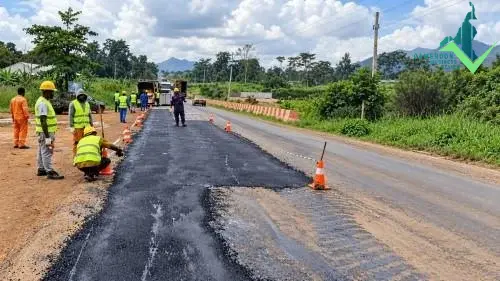
Cameroon has launched an international tender to reconstruct 167 kilometres of National Road No. 3 between Yaoundé and Edéa, opening a new procurement phase for one of the country’s most important transport links.
The Ministry of Public Works issued the tender on October 8, 2026. Interested contractors have until November 24, 2026, at 11 a.m. to submit their technical and financial bids. The works are divided into three contracts, each with an estimated construction period of 30 months.
The project targets an existing road used daily by passengers, commercial vehicles and freight operators moving goods between Douala, Cameroon’s economic capital, and Yaoundé. It also forms part of the wider Douala–Bangui corridor, which connects the Port of Douala to the Central African Republic.
For businesses, the condition of this route affects more than travel time. It influences delivery schedules, vehicle maintenance, inventory planning and the cost of moving goods to market.
What the 167-kilometre project covers
The reconstruction will cover the section between Yaoundé and the junction at Edéa. Rather than widening the entire road, the government plans to reconstruct the existing carriageway, improve sections of its alignment and expand selected stretches to four lanes.
The tender is divided into three lots.
Yaoundé–Madoumba: 52.05 kilometres, including reconstruction, improvements to certain curves, 22.575 kilometres of four-lane road and a digital weigh station.
Madoumba–Ndoupé Bridge: 52.05 kilometres, including reconstruction, 10.75 kilometres of four-lane road and rehabilitation of bridges, drainage and other structures.
Ndoupé Bridge–Edéa junction: 62.90 kilometres, including reconstruction, 12 kilometres of four-lane road and improvements to drainage and other hydraulic structures.
Together, approximately 45.3 kilometres will be widened to four lanes. The remaining sections will undergo reconstruction and other improvements without being fully expanded to four lanes.
Each contract is expected to take 30 months once work begins. However, the tender notice does not establish a confirmed construction start date or a final completion date.
Why the road matters to Cameroon’s businesses
The Douala–Yaoundé route connects two cities with different but closely linked economic roles.
Douala hosts Cameroon’s principal seaport and a major concentration of industrial, commercial and distribution activity. Yaoundé is the administrative capital and an important market for consumer goods, services and public-sector procurement.
The road carries manufactured products, food, construction materials, imported goods and other cargo between these economic centres. It also serves trucks transporting freight towards the Central African Republic and other destinations in the region.
When road conditions deteriorate, the cost is felt throughout the supply chain.
Transport operators may face higher fuel consumption, more frequent vehicle repairs and longer journeys. Importers and distributors may need to hold additional inventory to account for uncertain delivery times. Manufacturers can face interruptions when raw materials arrive late, while businesses shipping perishable products have less room for delays.
Reconstruction could ease some of these pressures, provided the finished road offers better pavement conditions, safer driving and more predictable travel.
The commercial benefits will depend on the quality of the works and how effectively the route is maintained after construction.
Part of a wider World Bank-backed trade corridor programme
The road project forms part of the Douala–Bangui Economic Corridor Development Program, a regional initiative supported by the World Bank.
In June 2026, the World Bank approved a $1.12 billion regional programme, with an initial phase valued at $525 million. Cameroon was allocated $425 million for its participation in this first phase, including financing for road infrastructure, safety, maintenance and other corridor-related activities.
In October, President Paul Biya authorised a €347.5 million loan agreement with the International Bank for Reconstruction and Development, equivalent to approximately $391 million at the time. The agreement is associated with Cameroon’s share of the regional corridor programme.
These figures should not be mistaken for the construction budget of the 167-kilometre road section alone. The broader financing covers several components of the programme, and the estimated cost of each of the three road contracts was not specified in the tender information reviewed.
The distinction matters for businesses and potential contractors assessing the scale of the opportunity.
The corridor’s regional importance extends beyond Cameroon
The wider Douala–Bangui corridor is especially important to the Central African Republic, a landlocked country that relies heavily on Cameroon’s transport infrastructure to access international trade routes.
According to the World Bank, the corridor stretches more than 1,400 kilometres and carries over 80% of the Central African Republic’s foreign trade. The institution has also highlighted high transport costs, long journey times and numerous checkpoints as constraints affecting trade along the route.
Improving the road surface is therefore only one part of the challenge.
Freight efficiency also depends on border procedures, checkpoints, road maintenance, vehicle controls and the time goods spend waiting at different points along the corridor.
The regional programme includes measures intended to improve road safety, maintenance and trade conditions. If these measures progress alongside the physical works, businesses could benefit from more reliable freight movements between Cameroon and neighbouring markets.
For transport operators, exporters and distributors, the combined effect of better infrastructure and more efficient procedures is likely to matter more than road widening alone.
Why Cameroon is rebuilding the existing road while developing a highway
The reconstruction comes as Cameroon continues developing a separate highway between Douala and Yaoundé.
The two projects address the same broad economic connection but serve different infrastructure needs.
The highway is intended to provide a new, higher-capacity route between the country’s two largest cities. National Road No. 3, meanwhile, is an existing road already used by freight operators, commuters and businesses.
According to the Ministry of Public Works, the first 60-kilometre phase of the highway has been completed, while the second phase extends over 141.1 kilometres. The second phase has faced challenges, including access to the land required for construction and compensation issues affecting communities along the route.
Rehabilitating the existing road remains important even as the highway develops. Businesses cannot rely on a planned alternative route until the relevant sections are operational and accessible.
Maintaining and improving the current network also matters for towns and commercial activities that depend on the existing road.
Opportunities for construction and supporting businesses
The tender creates a potential market for qualified road construction companies and specialist contractors.
The three-lot structure allows the project to be divided among different contracts, although the eventual allocation will depend on the procurement process and the bids received.
Beyond the principal construction works, major road projects can generate demand for a range of supporting services, including equipment rental, aggregates, cement, steel, transport, surveying, engineering, maintenance and accommodation for project personnel.
Local suppliers may find opportunities where contractors source materials and services domestically. However, the scale of those opportunities will depend on contract requirements, technical standards, procurement conditions and the capabilities of local businesses.
Companies interested in participating should review the official tender documents carefully, particularly the eligibility criteria, technical specifications, financial requirements and submission procedures.
For smaller Cameroonian businesses, subcontracting or supplying qualified contractors may offer a more realistic entry point than bidding for an entire road section.
The remaining gap between Edéa and Douala
The current tender covers the Yaoundé–Edéa section, not the entire road to Douala.
The remaining stretch, approximately 51 kilometres between Edéa and the bridge over the Dibamba River, is being prepared under a separate arrangement. The wider plan includes a second bridge over the Dibamba River, with the French Development Agency, European Investment Bank and European Union identified as potential financial partners. Financing for this section had not been finalised in the information reviewed.
That leaves an important question for the overall corridor: how quickly can the remaining sections be financed and delivered?
Improving 167 kilometres would be significant, but the commercial benefits will also depend on the condition of the rest of the route between Yaoundé and Douala.
For freight operators, a well-reconstructed section cannot fully compensate for persistent bottlenecks elsewhere along the journey.
Final Thoughts
The tender to rebuild 167 kilometres of National Road No. 3 is an important step in improving the transport connection between Yaoundé and Edéa and supporting the wider Douala–Bangui trade corridor.
For Cameroon’s businesses, the potential benefits are practical: more dependable deliveries, lower vehicle maintenance costs, improved road safety and better connections between suppliers, ports and customers.
But the tender is only the beginning of the process. Contractor selection, financing, construction quality, land access and maintenance will determine whether the planned improvements translate into lasting gains.
The other key test is continuity. The remaining route towards Douala still needs a clear financing and implementation path if the entire connection is to deliver more reliable freight movement.
Cameroon Business Review will continue tracking the procurement process and the implications of the project for logistics, trade and investment in Cameroon.