
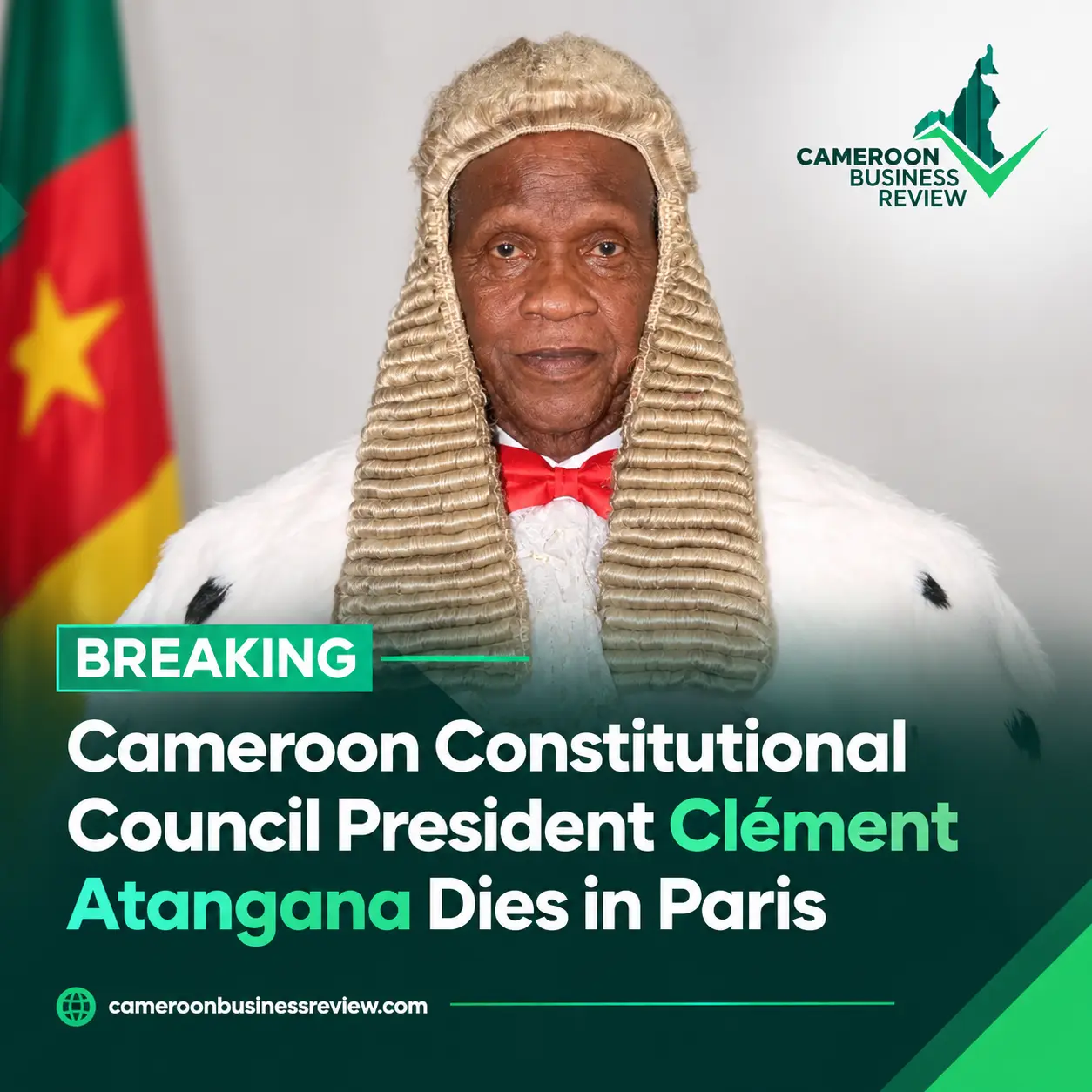
Clément Atangana Dies at 85, Leaving Cameroon’s Constitutional Council at a Turning Point
Clément Atangana, the first president of Cameroon’s Constitutional Council, died in France on October 4, 2026, at the age of 85, according to reports from several Cameroonian and regional media outlets. Cameroon Tribune also reported his death at the American Hospital in Paris.
Atangana had led the Constitutional Council since the institution became operational in 2018. His death brings an end to an eight-year tenure at the head of one of Cameroon’s most important constitutional institutions.
The immediate question is who will lead the council while the process for appointing a new president takes place.
Reports published after his death indicate that Professor Paul Nchoji Nkwi, the oldest serving member of the council, is handling the interim leadership of the institution. His role is to maintain continuity; it does not amount to a permanent appointment as president.
For Cameroon’s political and legal institutions, the transition comes at a sensitive time. The Constitutional Council has responsibilities that extend well beyond elections, including reviewing the constitutionality of laws and settling certain institutional disputes.
A career that spanned decades
Atangana was born on September 20, 1941, in the Centre Region of Cameroon.
He entered the magistracy in 1968 and spent decades in the judicial system before becoming the head of the Constitutional Council. His career included senior responsibilities within the courts and the Supreme Court.
His appointment to the Constitutional Council came in February 2018, when the institution was formally established.
A presidential decree dated February 7, 2018, appointed Atangana as president of the Constitutional Council. The same period saw the appointment of the council's inaugural members.
Six years later, his mandate was renewed.
A January 2024 decree renewed Atangana's term, along with those of several council members, for another six years.
That second term was interrupted by his death.
Why the Constitutional Council matters
The Constitutional Council occupies a specific place in Cameroon’s institutional system.
Under the Constitution, it has jurisdiction over constitutional matters and rules on the constitutionality of laws, treaties and international agreements. It can also settle certain conflicts of competence involving state institutions and regions.
Its electoral responsibilities make the institution particularly important.
The Constitution provides that the council oversees the regularity of presidential and parliamentary elections as well as referendum operations. It also proclaims the results of those elections. Candidates and political parties that participated in an election can bring challenges concerning its regularity before the council under the conditions set out in the Constitution.
That means the president of the council is not simply the head of another judicial body.
The position sits at the centre of some of the country's most consequential constitutional and electoral procedures.
Atangana’s tenure coincided with major elections
Atangana headed the institution during the 2018 presidential election and the 2025 presidential election.
The council was also involved in electoral disputes and the proclamation of presidential results during those electoral cycles.
His role during the 2018 election was part of the first major test of the newly operational Constitutional Council. In October that year, the council handled challenges related to the presidential election before proceeding with the proclamation of results.
The 2025 presidential election again placed the institution in the public spotlight.
Because the council has final responsibility for electoral disputes within its constitutional jurisdiction, decisions made under its authority can have consequences far beyond the courtroom.
That has made the institution a closely watched part of Cameroon’s political system.
What happens after his death?
The death of a sitting president creates a vacancy at the top of the Constitutional Council.
Reports published on October 5 said Atangana's office at the council's headquarters in Yaoundé had been placed under seal under the supervision of the public prosecutor. The reports also identified Paul Nchoji Nkwi as the interim head of the institution pending the appointment of a new president.
The distinction between interim leadership and permanent succession is important.
Cameroon's constitutional framework provides for the appointment of the president and members of the Constitutional Council. The President of the Republic appoints three members, including the president of the council, while other members are appointed through the National Assembly, Senate and Higher Judicial Council according to the constitutional arrangements. Members serve six-year terms that can be renewed.
The next appointment will therefore determine who takes responsibility for leading the institution through the remainder of the current council's mandate.
The business community also has a reason to watch
At first glance, the death of the Constitutional Council's president may appear to be purely a political or judicial story.
For businesses and investors, however, institutional continuity matters.
Constitutional institutions form part of the framework within which laws are adopted, elections are conducted and disputes involving state institutions are resolved. The stability and predictability of that framework can influence how businesses assess a market.
That does not mean Atangana's death has a direct effect on companies or financial markets.
Rather, the issue to watch is whether the transition at the council proceeds smoothly and whether the institution continues its work without interruption.
For companies operating in regulated sectors, investors assessing Cameroon and organisations following public policy, the functioning of constitutional institutions is part of the broader business environment.
A succession that will attract attention
The next appointment will likely receive close attention because of the Constitutional Council's position within the state.
The council has 11 members, appointed for six-year terms, and its president is among the members appointed by the Head of State.
The immediate priority is continuity.
The longer-term question is who will be selected to lead the institution and how that person will oversee the council's constitutional and electoral responsibilities during the remainder of the current mandate.
For now, Paul Nchoji Nkwi's interim role provides a mechanism for the institution to continue functioning while the succession process unfolds. Reports indicate that he is serving in that capacity as the oldest member of the current council.
What to watch next
For observers of Cameroon’s political and institutional environment, several developments will be important:
The formal appointment of a new president of the Constitutional Council.
Any official communication concerning Atangana's death and succession.
The continued functioning of the council under its interim leadership.
The composition of the council following any future appointments or renewals.
How the institution handles its constitutional and electoral responsibilities during the transition.
These developments will provide a clearer picture of how the institution moves forward after the departure of its first president.
Final Thoughts
Clément Atangana's death closes an important chapter in the history of Cameroon's Constitutional Council.
He was the first person to lead the institution after it became operational in 2018 and remained at its head through two presidential election cycles. His career before the council had already taken him through several senior positions in Cameroon's judicial system.
The immediate issue now is continuity.
The Constitutional Council remains responsible for important constitutional and electoral functions, and the appointment of a permanent successor will determine who leads it into its next phase.
For Cameroon Business Review, the story is worth following beyond the succession itself. Changes within major state institutions can affect the country's regulatory environment, investor confidence and the way businesses understand the institutions around them.
We will continue to follow the developments and examine what they mean for Cameroon’s institutional and business environment.